

How PC History Graduate, Courtney Garrity, Built a Purpose-Driven Career in New England Storytelling
“The presences and absences in sources… are neither neutral nor natural. They are created.”
This insight from historian Michel-Rolph Trouillot sits at the heart of Courtney Garrity’s work—and it serves as an ideal opening to her story. Courtney, a recent graduate of Providence College’s M.A. in History program, has built a career around uncovering voices long buried in the archives and reframing New England history for today’s world. Her path shows just how far a graduate degree in History can take you, and how PC equips students to make the past newly relevant, deeply human, and socially impactful.
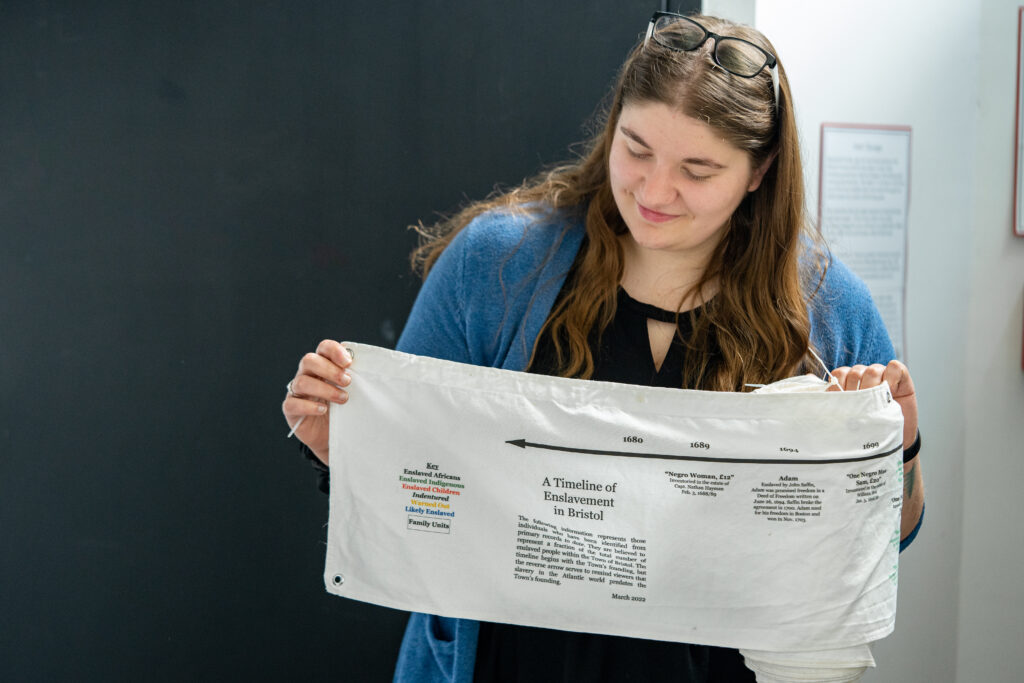
Courtney’s path into historical research began during her undergraduate studies, when a course project introduced her to the overlooked history of enslavement in Bristol, Rhode Island. That experience sparked years of independent scholarship with the Bristol Historical & Preservation Society, where she has researched the lives of enslaved individuals and created public-facing work such as a 56-foot Timeline of Enslavement and an accompanying database. Drawn to small class sizes, strong mentorship, and research-oriented programs, she chose Providence College to further develop her research skills and expand her impact.
Reexamining New England: How PC Shaped a Scholar of King Philip’s War
Courtney’s interests expanded during graduate school, especially in ethnohistory, public history, and early New England. Her research into King Philip’s War—also known as Metacom’s War, the First Indian War, or Metacom’s Rebellion—reflects her commitment to telling fuller, more inclusive stories. Despite being the bloodiest conflict ever fought on American soil, the war remains widely misunderstood.
“Growing up in the sacred seat of the Pokanoket,” she shared, “learning this history from both a settler and Indigenous perspective was really important.” PC’s program encouraged this nuance, helping her approach well-known events through more ethical, empathetic, and community-centered research practices.
Learning this history from both a settler and Indigenous perspective was really important.
Courtney Garrity, ’25G
The biggest challenge? The sources themselves. Archival materials related to people of color—free or enslaved—were nearly always written by those in power, often white men who imposed their own biases on the record. As Courtney notes, researchers today must navigate documents that “come from compromised or alternate perspectives,” requiring both skill and sensitivity. PC’s faculty guided her through precisely that type of critical historical practice.
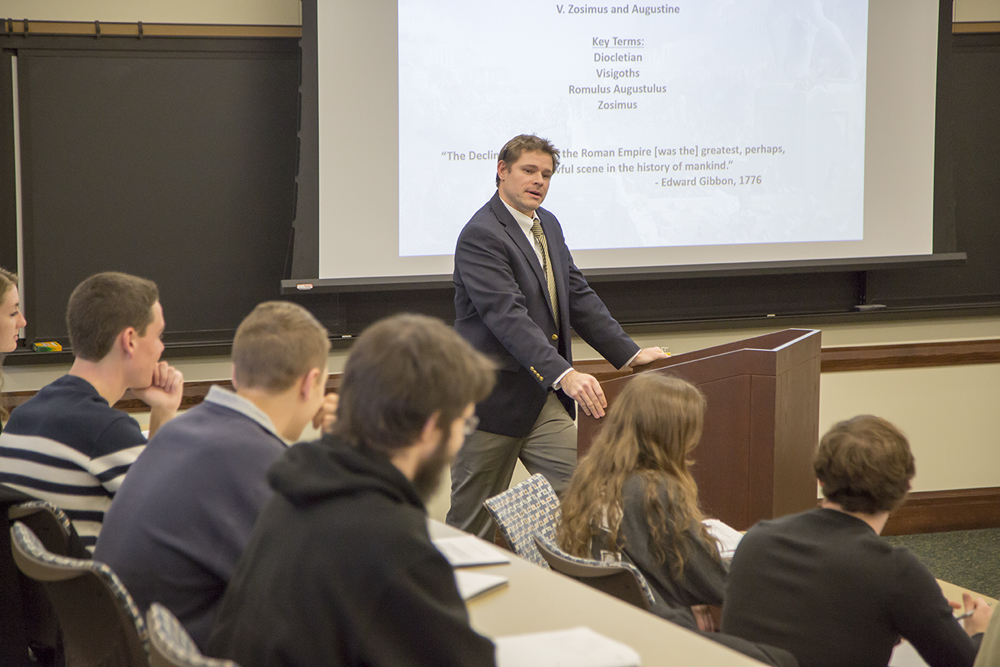
Courses like Early Black Biographies with Dr. Edward Andrews, along with the mentorship of Dr. Breen and Dr. Murphy, helped Courtney refine her research methods and expand her undergraduate thesis into graduate-level scholarship. PC’s history graduate program pairs each student with a faculty advisor, ensuring personalized mentorship throughout their studies. Additionally, hands-on internships with the Bristol Historical & Preservation Society and the Rhode Island Historical Society gave her practical exposure to archival research, museum operations, and public-facing historical storytelling.
Career Impact: Turning Research Into Public History That Matters
Today, Courtney continues her research into enslavement, emancipation, and freedom in Bristol and the broader county, while developing a database intended to support future scholars and genealogists. Her work shows how a Providence College education can empower students to pursue meaningful, impactful, and unconventional career paths rooted in a deep understanding of the past and its influence on the present.
If Courtney’s story inspires you, explore the M.A. in History program at Providence College and discover how you can turn your passion for the past into a purpose-driven career.
Graduate History Program at PC Key Takeaways:
- How does Providence College’s graduate history program support historical community research? Providence College’s M.A. in History program develops strong research, archival, and public history skills, preparing graduates for impactful, community-focused careers.
- In what ways does the PC M.A. in History highlight marginalized voices in New England? PC’s history graduate alumni’s work highlights the importance of uncovering marginalized voices in New England history, especially in topics like enslavement, early Black communities, and King Philip’s War.
- What are the mentorship opportunities as a graduate history student at Providence College? Faculty mentorship and small class sizes at PC support personalized academic growth, giving students the guidance needed to pursue complex and sensitive historical research.
- What is the graduate history program impact on local community organizations in Rhode Island? Hands-on internships with local historical organizations—including the Bristol Historical & Preservation Society and the Rhode Island Historical Society—strengthen students’ real-world experience in museums, archives, and public history.
- How does Providence College incorporate an ethical approach to approaching historical topics? PC’s History program encourages ethical, inclusive storytelling, teaching students how to interpret biased or incomplete sources and approach the past with nuance.